Which processes can Studio73 connect?
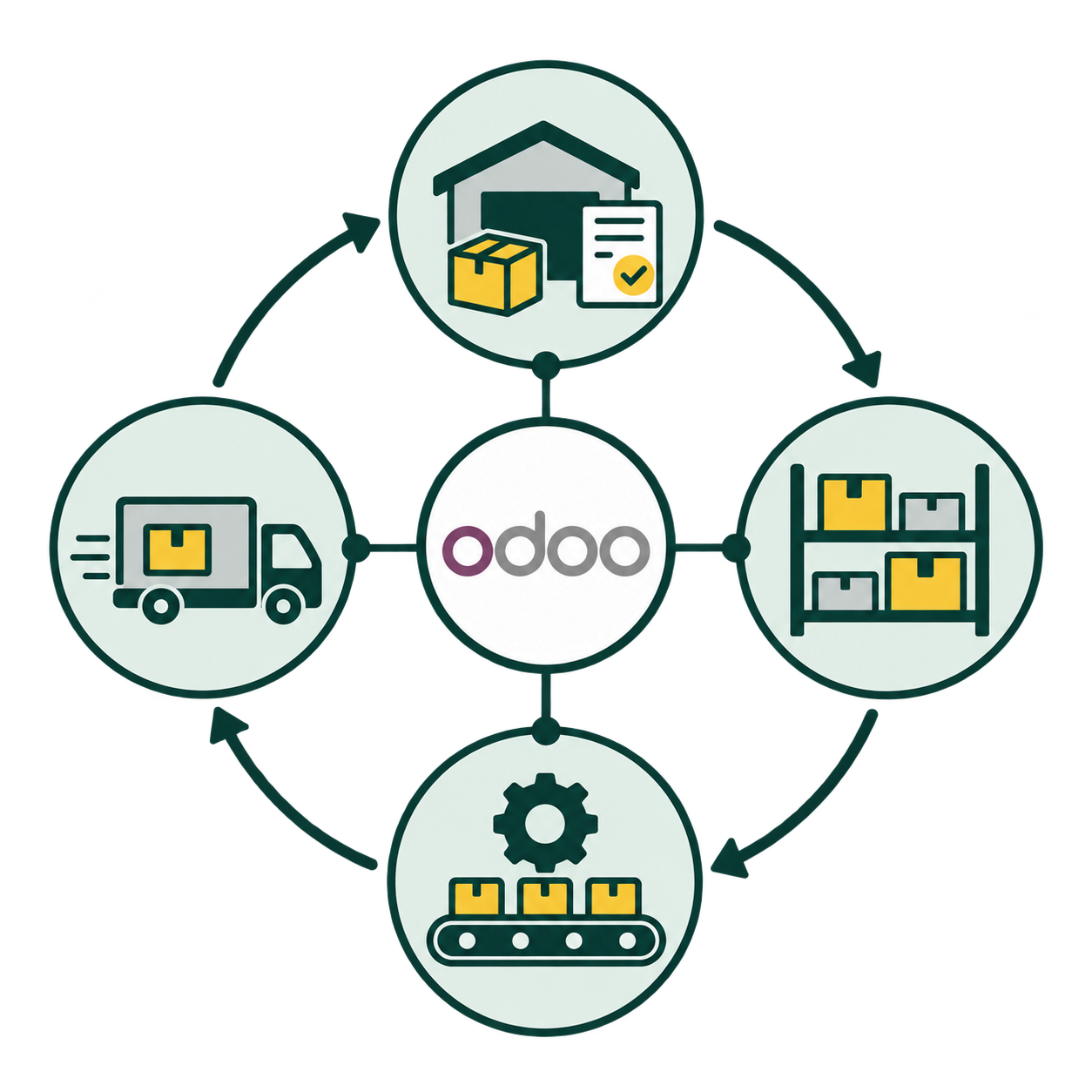
We analyse the relationship between planning, purchasing, suppliers, inventory, warehouses, order picking, transport and returns, together with sales, production or finance when they are within scope. The connection must respond to a specific operational priority. It is not about joining processes one by one, but about defining how information flows and who is responsible for each piece of data.
Do we need to replace our current system?
Not necessarily. We review what function each tool performs, what limitations it has, how much it costs to maintain and what options it offers to integrate with the rest of the ecosystem. With that analysis we decide whether to keep it, connect it, simplify it or replace it in phases.
Can Odoo be integrated with carriers, ecommerce or external systems?
It can be feasible when there is a suitable technical basis, such as an API, a compatible connector or a reliable information exchange mechanism. Before integrating, we define which data must flow, which system will own each piece, how often it will be updated and how errors, delays and exceptions will be handled.
How are changes implemented without stopping operations?
We work in phases, validate critical journeys in test environments and agree on acceptance criteria before go-live. The specific strategy depends on the volume of operations, the current systems and the processes that cannot be interrupted. When a change window is needed, it is planned with defined owners, checks and exit conditions.
How does inventory reliability improve?
Technology can help record receipts, locations, reservations, consumption and shipments within a common process. The information will only be reliable if there are also adequate master data, clear rules and a consistent way of working. Odoo does not by itself correct errors caused by incomplete records or processes that are not followed.
How are operational issues and exceptions managed?
First we identify which situations require a different course of action, such as partial receipts, stock shortages, supplier delays, returns or incomplete orders. Then we define statuses, owners and resolution criteria. Alerts or automations only make sense when there is a clear rule and someone can act on it.