Catalogue and sales synchronization
Connect Amazon and Odoo to synchronize inventory, prices and orders in real time and automate logistics management and invoicing.
OMNICHANNEL COMMERCE
We integrate ecommerce, marketplaces, physical stores and B2B sales through connectors and solutions designed to coordinate orders, stock, logistics and invoicing.
Tell us how you sell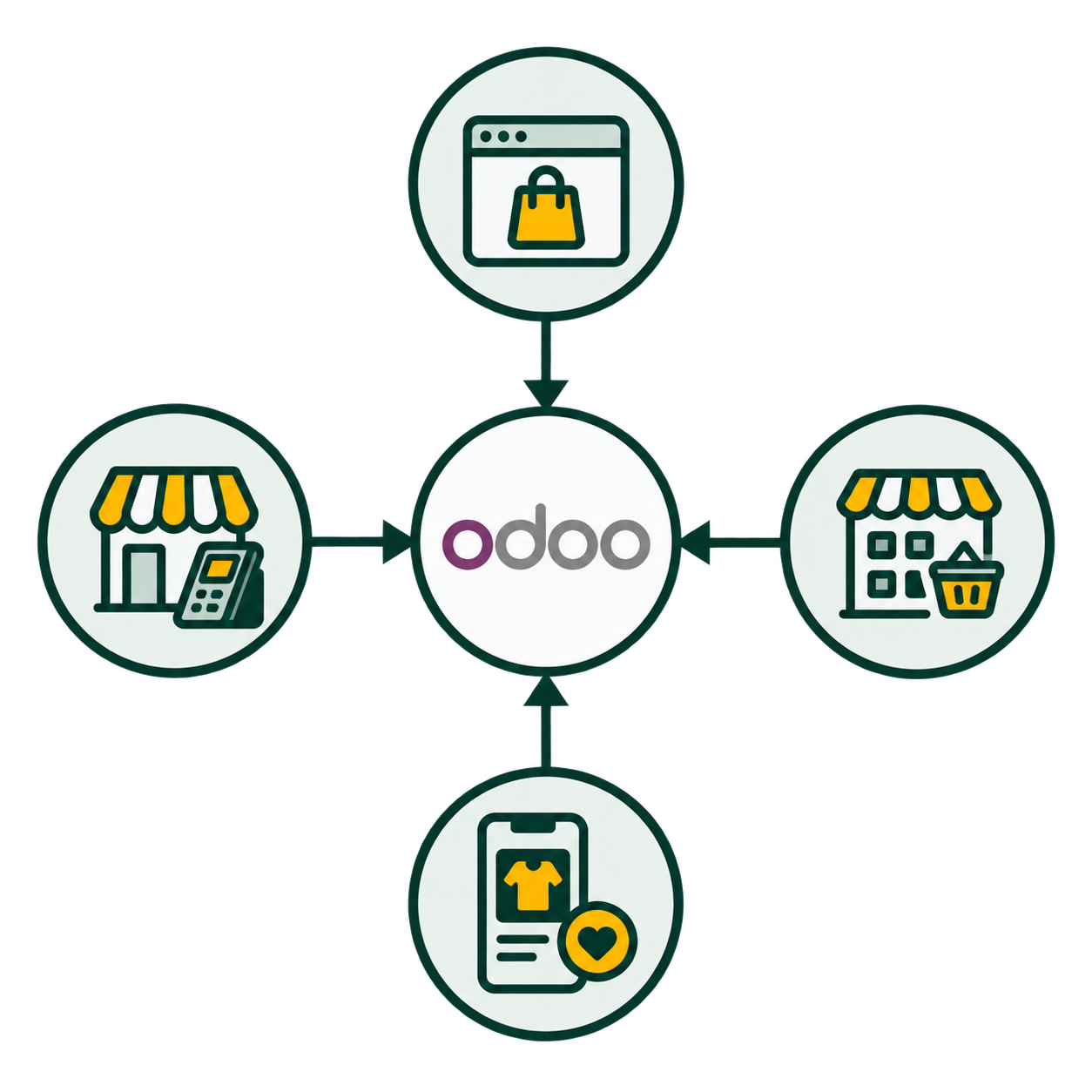
THE COMPLETE JOURNEY
For the customer it is a single purchase. Inside the company, each platform change can create checks, delays or incomplete information.
The order arrives from any channel and the system identifies the customer, payment and terms.
It checks real availability and applies reservations and priorities to avoid stock problems.
The system selects the right warehouse or logistics centre based on availability, cost, destination and lead time.
Shipment tracking updates automatically so that sales and customer service know its status.
The return is recorded, the product goes back into inventory when appropriate and its financial and logistics effects are updated.
Omnichannel works when each stage knows what happened in the previous one, even when different platforms and owners are involved.
STUDIO73 CONNECTORS
Studio73 has solutions to integrate Odoo with key digital commerce platforms.
See our connectors →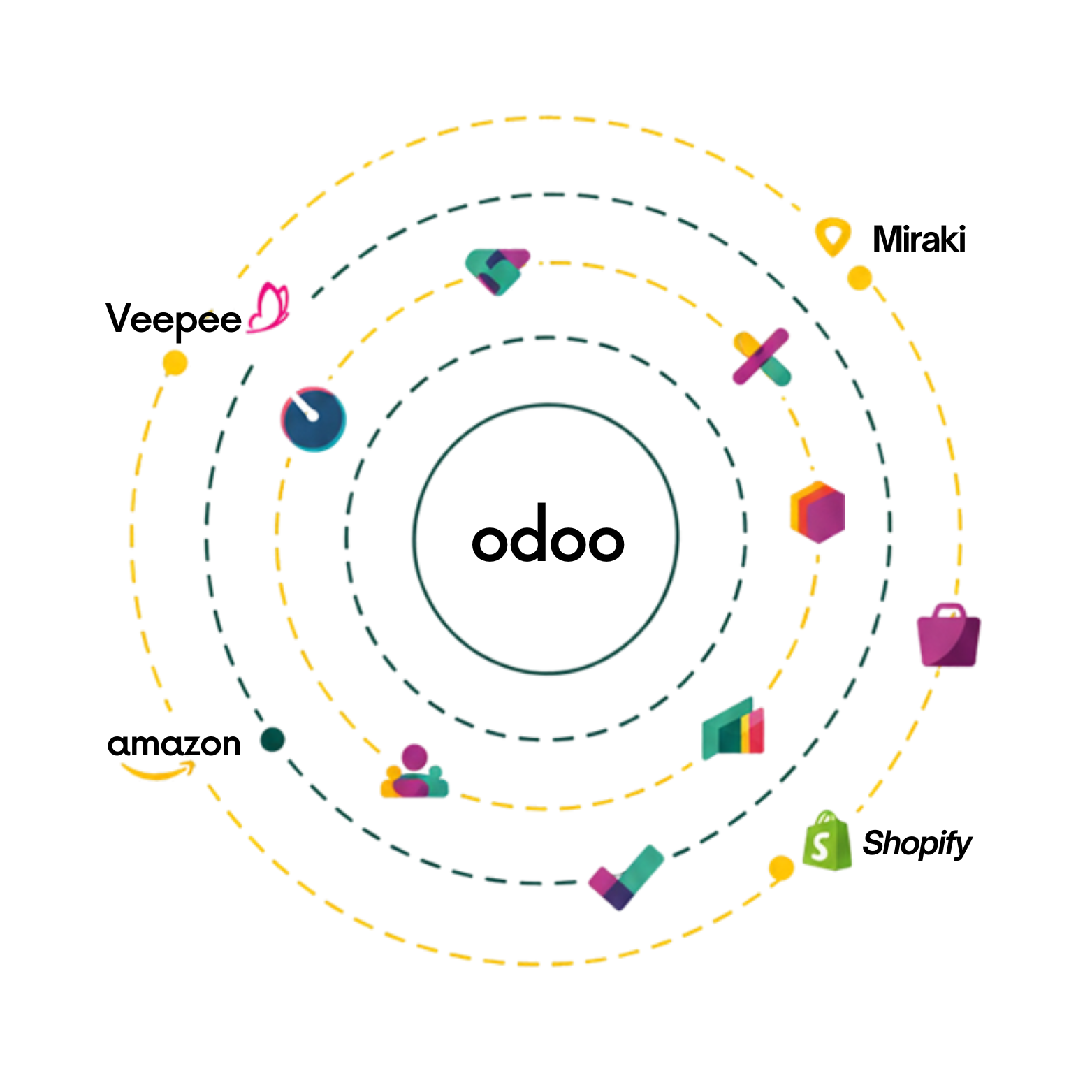
Connect Amazon and Odoo to synchronize inventory, prices and orders in real time and automate logistics management and invoicing.
Manage inventory, orders, picking and invoicing from Odoo, keeping Shopify as a sales channel.
Connect Odoo with Mirakl to manage offers, orders and availability from a common technology base.
Integrate Veepee orders with sales, logistics and financial processes to manage them from Odoo.
OPERATIONAL RESULTS
New channels are added on top of already defined processes, reducing the need to add manual tasks and checks every time volume grows.
A coherent view of the catalogue, availability and order status reduces cancellations, information discrepancies and queries between departments.
Sales, warehouse and customer service work with the same context, wherever the purchase was made.
We link sales, discounts, returns, commissions and logistics costs to know the real contribution of each channel and decide where it is worth growing.
HOW WE IMPLEMENT IT
Our main goal is to solve the “tough problems” in operations with clear decisions and processes that can be maintained.
Connecting applications only makes sense if it changes the way of working and improves the customer experience.
The impact can be measured through:
These indicators make it possible to check whether operations can absorb a higher sales volume and to decide which improvement to prioritize.

FAQ
Not necessarily. If the platform offers a suitable shopping experience and can exchange the necessary information, we can study its integration with Odoo.
The decision depends on its technical capabilities, maintenance cost, the control it has over the catalogue and the role it should play within the ecosystem.
Not always. We start from reusable solutions and knowledge, but each company may have different catalogues, price lists, taxes, logistics rules or processes.
Before implementing a connector, we review what it covers, what needs to be configured, what limitations it has and whether any specific capability needs to be developed.
We define which system will own the catalogue, available inventory, reservations and the rules for each channel.
Depending on operations, shared inventory, units allocated per channel, priorities or safety margins can be used. Prevention depends on data quality, synchronization frequency and the behaviour of each platform.
It can be feasible if the operation and the provider’s system can exchange the necessary information.
We define where each order is picked from, how a location is replenished, which statuses must be communicated and who is responsible when there is a difference between the order, the inventory and the shipment.
A well-defined architecture can make it easier to add new channels, but each integration requires reviewing its technical and operational conditions.
Before adding one, we analyse the impact on catalogue, prices, inventory, logistics, customer service and financial information. Each addition must be treated as an extension with its own scope and testing.
The solution must establish which system acts as the main source for each type of information.
It is also necessary to define who can modify that data, how it is synchronized with the channels and what happens when two systems hold different values. Without these rules, adding channels can increase duplicates and errors.
RELATED SERVICES
It could be a new marketplace, an online store, a B2B channel or a logistics provider.
Tell us which platforms you use, what you want to connect and how you currently manage orders. We will review whether there is a reusable solution and what should be solved first.
Tell us how you sellA first conversation focused on your channels, the order journey and your real integration needs.